
How to Structure Failure Diagnosis in Assets to Prevent Downtime and Boost Reliability
Failure diagnosis is essential to improving reliability, safety, and performance in industrial operations. When done poorly, teams end up fixing symptoms—not root causes—leading to recurring failures, higher costs, and unplanned downtime.
Just like in medicine, symptoms such as vibration, overheating, or performance loss must be analyzed in depth. Without a structured approach, maintenance becomes reactive instead of strategic.
What is Failure Diagnosis?
Failure diagnosis is the process of identifying the root cause of equipment failures—not just repairing what’s visible.
It transforms raw symptoms into actionable insights using data, history, and analysis methods—helping teams implement lasting solutions and prevent recurrence.
Result:
- Reduced downtime
- Higher asset availability
- Stronger reliability culture
3 Key Steps for Effective Diagnosis
- Identify the Problem SourceStart by gathering critical information: failure records, inspection history, operator feedback, and operating conditions.
This helps distinguish symptoms vs. real causes. - Analyze & Structure the DataOrganize findings into clear hypotheses. Tools like:
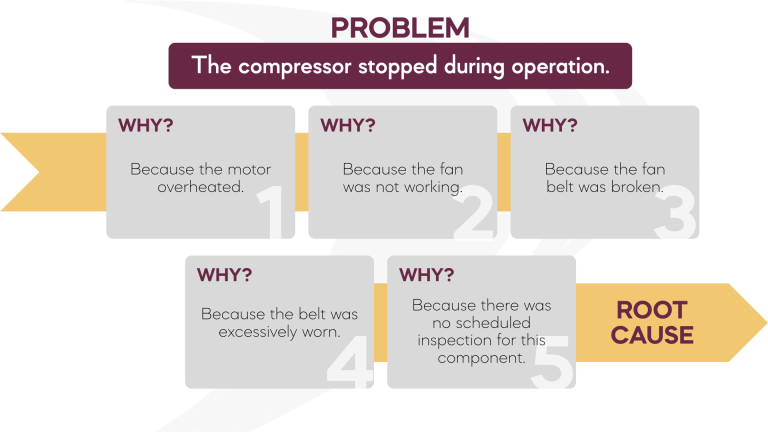
- 5 Whys
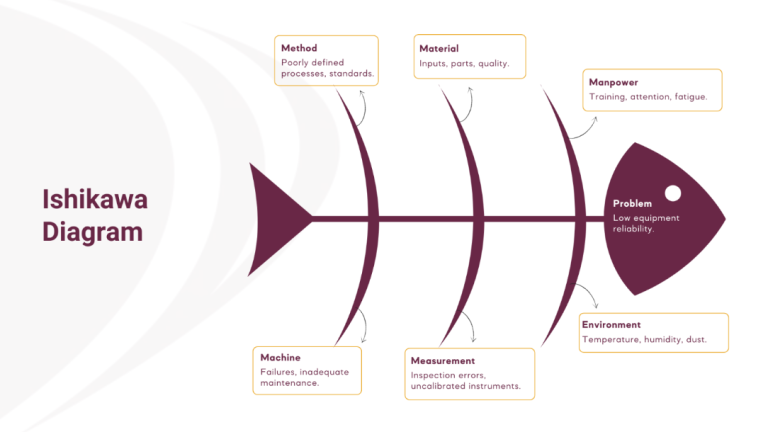
- Fishbone (Ishikawa) Diagram
- Act & Monitor ResultsDevelop a clear action plan:
- Corrective actions (fix the issue)
- Preventive actions (avoid recurrence)
- Performance tracking (MTBF, MTTR, etc.)Sharing results across teams creates a continuous improvement cycle
Essential Tools for Failure Diagnosis
To ensure accurate and repeatable results, combine data with structured methods:
- 5 Whys – drills down to the real root cause
- Fishbone Diagram – visualizes all possible contributing factors
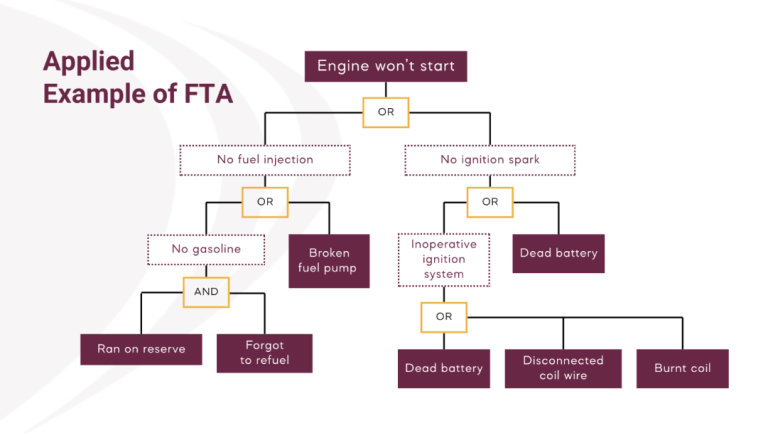
- Fault Tree Analysis (FTA) – maps cause-effect relationships and failure probabilities
These tools shift maintenance from reactive fixes to systematic problem-solving.
How to Improve Your Diagnosis Process
To build a reliable system, focus on consistency and data quality:
- Standardize failure records for better analysis
- Ensure traceability of maintenance actions
- Train teams in diagnostic methodologies
- Adopt continuous monitoring technologies
With IIoT sensors and AI-driven analytics, failures can be detected early—before becoming critical—improving accuracy and reducing manual effort.
Turning Diagnosis into a Strategic Advantage
Failure diagnosis should not be a one-time activity—it must be part of a continuous improvement strategy.
When combined with predictive maintenance and real-time monitoring, it enables:
- Early anomaly detection
- Data-driven decisions
- Reduced operational risks
Conclusion
Effective failure diagnosis goes beyond fixing equipment—it builds a smarter, more reliable operation.
By following a structured approach, using the right tools, and leveraging modern technologies, industries can prevent recurring failures, reduce downtime, and maximize asset performance.
Reference:
https://dynamox.net/en/blog/failure-diagnosis-in-assets-steps-tools-and-best-practices